


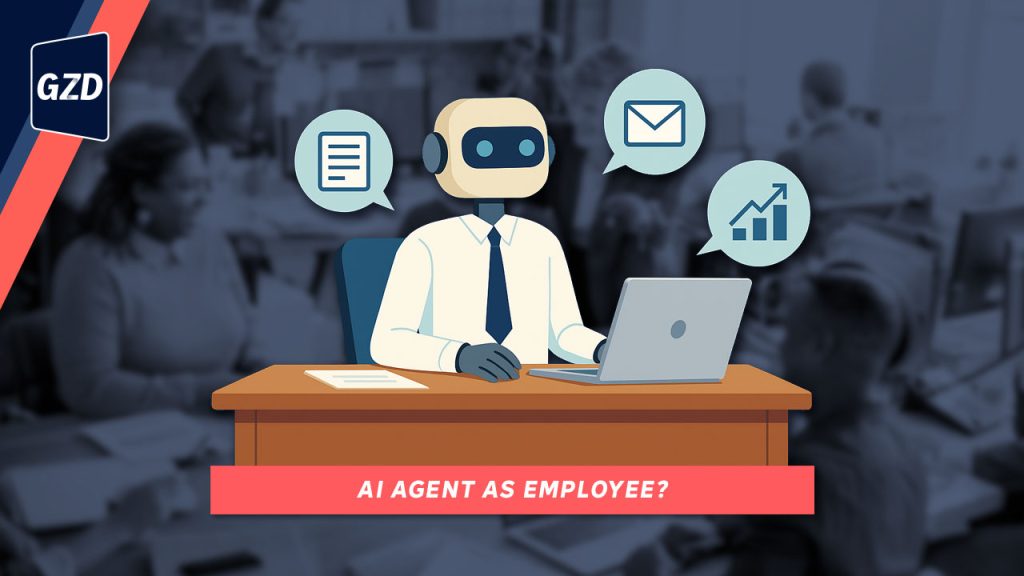
Your next best employee won’t be human
What if one of your competitors could suddenly get twice as much work done, without hiring anyone new? No extra desks. No recruitment fees. No increased payroll. Just more output.

That’s the shift businesses are moving into right now.
AI agents are rapidly becoming some of the most valuable additions to modern organisations, but only when they’re set up for success.
But first… Are you wondering what an AI agent actually is?
An AI agent is a software‑based “digital employee” that can think through tasks in a surprisingly human way. It can read documents, write and summarise emails, recap meetings, analyse data, draft proposals, create job descriptions, and even assist with writing code: using your business information as its context.
If you’re already using Microsoft 365, you’ve likely seen early versions of this built into Word, Outlook, and Teams.
AI Is Already Here (But Most Businesses Are Dabbling)
Right now, many small and mid‑sized businesses are experimenting:
- Someone asks AI to tidy up an email
- Someone else uses it to help write a report
That kind of ad‑hoc use is helpful, but the real advantage comes when AI is set up to work across the organisation, not just in isolated moments.
And this is where many businesses will either pull ahead, or fall behind.
AI Needs the Right Data Foundations
AI tools work best when your data is organised, accurate, and accessible.
If your files are scattered across personal laptops, old file servers, and forgotten cloud apps, AI can’t safely or reliably “see” the information it needs.
This is where SharePoint becomes critical.
AI agents will do the work, but you must ensure your data is structured and governed.
(Think clear folder structures, consistent naming, up‑to‑date documents, and the right permissions.)
Security, Governance, and Readiness
Being ready for AI doesn’t mean being highly technical. It means:
- Tidy systems
- Clear permissions (who can access what)
- Strong security controls
- Confidence that your information is protected
(If security is weak, giving AI deeper access can increase risk rather than value.)
Reframing the Cost of AI
It’s also important to rethink how AI is positioned within your organisation.
An AI agent shouldn’t be viewed as an IT cost: it’s a digital employee cost.
You wouldn’t employ the first prospect you meet. You’d:
- Define the role
- Decide what success looks like
- Put a process in place
AI adoption should follow that same discipline.
AI Is Like Hiring a Graduate
Think of AI like training a new graduate from the ground up.
They don’t arrive knowing your systems, processes, or values – that context has to be provided. AI is no different. It needs structure, guidance, and clear boundaries to be effective.
For AI to deliver real value, organisations should focus on:
- Clearly defined roles and tasks
(What should the AI agent do, and what should it not do?) - Well‑organised data
(Especially within SharePoint and core systems) - Governance and access controls
(What data can the AI “see” and use?) - Alignment with business processes and values
(AI should work the way your business works)
Why This Matters Now
This isn’t a small improvement.
The people building these tools are predicting dramatic leaps forward very quickly. Tasks that currently take hours may soon take minutes. Research that once required days could happen in seconds.
Businesses that can onboard AI agents smoothly will accelerate. Those that can’t will feel slower, more expensive, and less responsive by comparison.
And this isn’t about replacing your team: it’s about giving them superpowers.
Let’s Explore What’s Possible
The businesses that win in the next few years won’t necessarily be the biggest or the oldest. They’ll be the ones that were ready.
If you’d like to discuss how AI could be planned, structured, and introduced to genuinely benefit your organisation, we’d be happy to help.
Get in touch with us to start the conversation.